


Essential details
Shipping:Express Delivery
Product Introduction
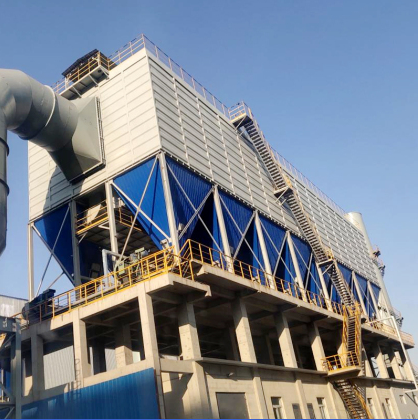
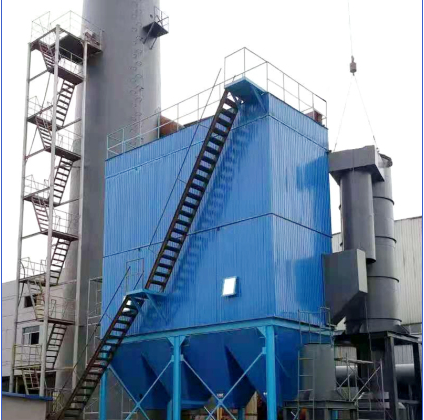
The working mechanism of a baghouse dust collector is that dust-laden flue gas passes through filter materials, where dust particles are trapped. Coarse dust particles are captured by inertial collision, while fine particles are trapped by diffusion and sieving. The dust layer on the filter material also provides secondary filtration. The dust removal efficiency of a baghouse depends on multiple factors, but primarily on the filter material. Filter materials for baghouses are fabrics or felts woven from synthetic fibers, natural fibers, or glass fibers, which are then sewn into cylindrical or flat filter bags as needed.
Filter materials are selected based on flue gas properties: For flue gas below 120°C requiring acid resistance and durability, polyester fleece or needle-punched polyester felt is commonly used; for high-temperature flue gas (<250°C), graphitized glass cloth is preferred; in special cases, carbon fiber filters may be used. Controlling the gas flow rate through the filter (filtration velocity) is critical during operation. Typically, the filtration velocity is 0.5–2 m/min, achieving over 99% efficiency for particles larger than 0.1 μm, with equipment resistance loss of approximately 980–1470 Pa.